The first heavy September rain tells you everything you need to know about your gutters. If water sheets over the front edge instead of running to the downspout, or if you hear it drumming into the flower bed instead of moving away from the house, your system is already behind. In Fort Oglethorpe, that first overflow usually shows up before a single leaf has fallen — which means the real problem is still weeks away.
Homes here sit under oaks, maples, sweetgums, and pines. Between late October and early December, all of that comes down at once. Gutters that are only marginally working in September will be completely blocked by Thanksgiving, and by then you are dealing with freezing nights, wet ladders, and water finding its way somewhere it shouldn't.
This guide walks through what to check now, how to tell the difference between a gutter that needs cleaning and one that needs replacing, and whether leaf protection is worth it on a wooded lot.
Why Fall Gutter Work Matters So Much in Fort Oglethorpe, GA
Gutters have one job: move roof runoff away from your house. A typical roof sheds a surprising volume of water during a single storm, and all of it has to go somewhere. When the system works, that water travels to a downspout and discharges several feet from the foundation. When it doesn't, it falls straight down along the perimeter of the house.
That creates a chain of problems that gets expensive fast:
- Foundation and crawl space moisture. Water repeatedly saturating the soil at the base of a wall works its way toward the crawl space or basement. Over seasons, it contributes to settling, damp crawl spaces, and musty air inside the home. The EPA's guidance on
redirecting downspouts away from paved surfaces covers why discharge placement matters as much as the gutter itself.
- Fascia and soffit rot. A gutter that holds standing water or overflows backward soaks the wood it's fastened to. Once fascia softens, the gutter's own hangers lose their grip and the whole run starts to sag.
- Landscape and hardscape erosion. Concentrated runoff carves channels through mulch beds, undermines walkways, and stains siding and brick with splashback.
- Ice and freeze damage. North Georgia and Southeast Tennessee get enough freezing nights to matter. Water trapped in a clogged gutter freezes, expands, and pushes seams and hangers apart.
Catching all of this in early fall means you're working in dry, mild weather with plenty of time to schedule any repairs before winter.
Six Signs Your Gutters Need More Than a Cleaning
Cleaning solves a clog. It does not solve a failing system. Here's how to tell which one you have.
1. They sag or pull away from the fascia
Stand back and sight down the length of each run. A gutter should follow a consistent, gentle slope toward the downspout. Visible dips, waves, or a section leaning outward at the top means hangers have failed or the fascia behind them has softened. Re-hanging a section is sometimes possible, but widespread sagging usually points to replacement.
2. You see rust streaks or leaking seams
Orange staining, white mineral trails, or visible drips at a joint mean the seam has opened. Sealant can buy time on a single joint. If several seams are leaking on the same run, the system has reached the end of its service life.
3. Water overflows at the corners
Overflow at inside and outside corners during moderate rain — not just a downpour — usually indicates undersized gutters, a blocked miter, or a slope that has shifted. If it happens again right after a cleaning, the cause is structural, not debris.
4. Paint is peeling below the gutter line
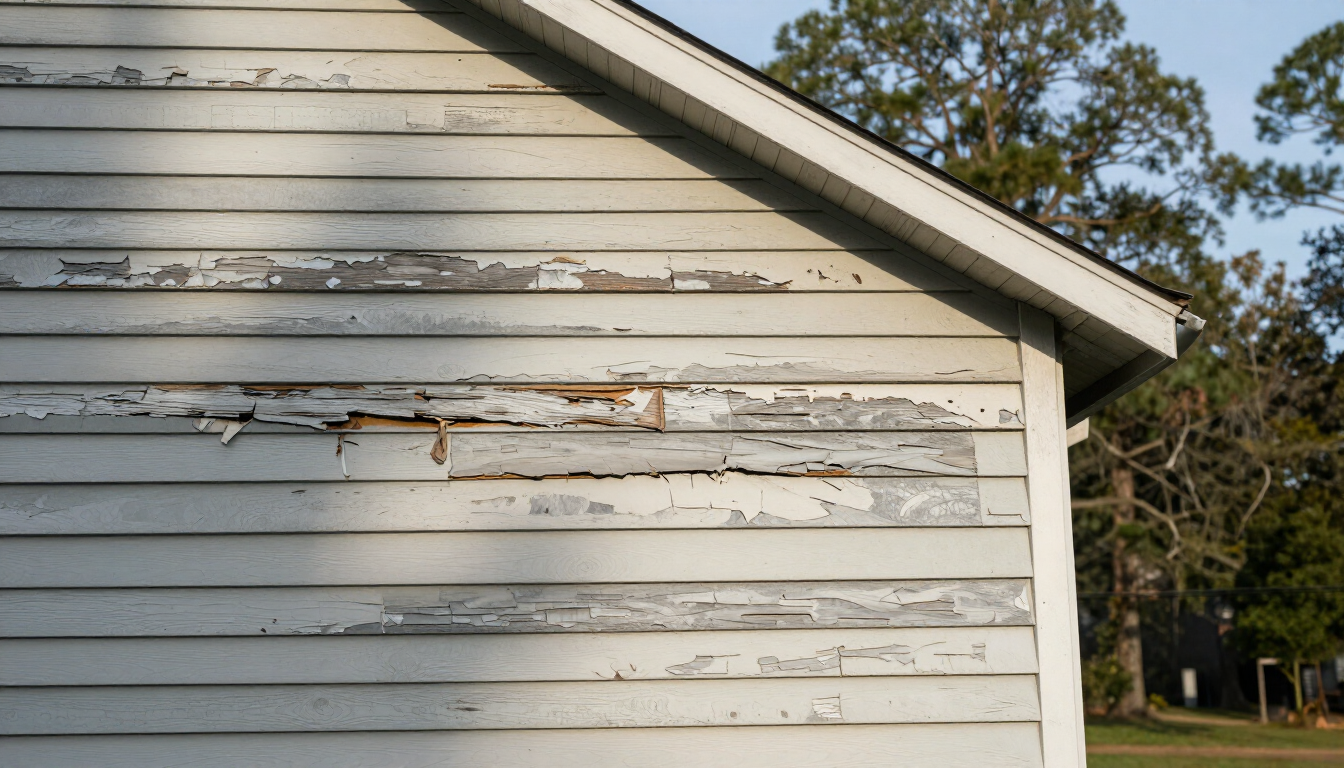
Blistered or peeling paint on the trim directly under a gutter is a reliable sign that water is running behind the system instead of through it. This is often a missing or damaged drip edge, and it damages wood quietly for years before anyone notices.
5. Water pools near the foundation after rain
Walk the perimeter an hour after a storm. Standing water, sunken mulch, or a soft depression against the wall means the downspouts aren't carrying water far enough from the house. Extensions and better discharge placement often fix this without touching the gutters themselves.
6. The gutters are sectional and constantly separating
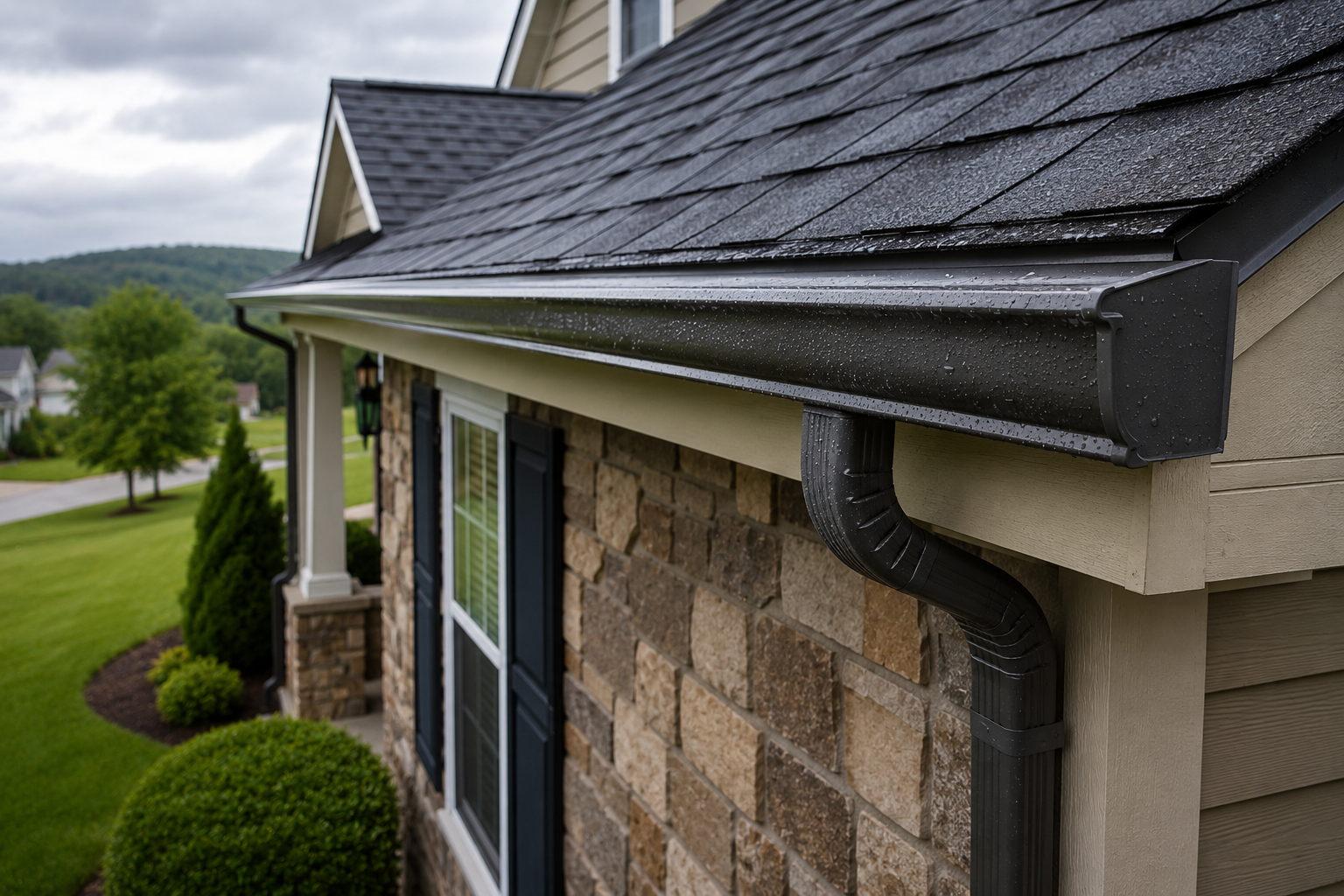
Older sectional gutters are assembled from short pieces joined every several feet. Every joint is a future leak. Seamless gutters are formed on site from a single continuous piece of coil, with joints only at the corners and downspout outlets — which is why they hold up far better on long runs.
Cleaning, Repair, or Replacement: How to Decide
A practical way to sort it out:
Cleaning is enough when the gutters hold their line, seams are dry, water reaches the downspouts once debris is removed, and the only complaint is seasonal clogging.
Repair makes sense when the problem is isolated — one sagging section, one leaking seam, a bent downspout, a missing elbow, or a discharge point that needs extending. A repair is worth doing on a system that is otherwise sound and reasonably young.
Replacement is the better investment when multiple seams leak, the fascia behind the gutter has soft spots, the gutters are undersized for the roof, or you've paid for the same repair more than twice. At that point, repairs are rent — you keep paying and you never own a working system. Our
seamless gutter installation and repair services cover both directions, so the recommendation isn't tied to selling you the bigger job.
An onsite evaluation is the only reliable way to tell which category you're in, because the fascia condition behind the gutter is the deciding factor and it isn't visible from the ground.
Do Gutter Guards Make Sense for Catoosa County Homes?
On a lot with mature hardwoods, yes — with a realistic expectation attached.
Quality leaf protection dramatically reduces how often you're on a ladder and keeps large debris out of the trough. What no guard does is make gutters maintenance-free. Pine needles, shingle granules, and fine grit still accumulate on top of a screen or inside a micro-mesh, and the system still needs an inspection at least annually.
Guards are usually worth it when:
- Your roof sits under overhanging limbs
- The roofline is high or steep enough that ladder work is genuinely unsafe
- You've had repeat clogs in the same section year after year
- You have pines nearby, where needle load is heavy and constant
They matter less on an open lot with a low roofline and no overhang. A contractor who tells you every home needs guards is selling, not evaluating.
Your Fall Gutter Checklist
Work through this in September or early October, before leaf drop. It lines up with what the
Insurance Institute for Business & Home Safety recommends for seasonal storm readiness — clear gutters and downspouts are on their short list of maintenance items that reduce storm damage.
- Watch the system during real rain. Note every overflow point and the corner or seam where it starts.
- Clear debris from the trough and downspouts. Flush with a hose and confirm strong flow at each discharge point.
- Check the slope. Water standing in the trough after flushing means the pitch is off.
- Inspect every seam and end cap for staining, drips, or separation.
- Press the fascia board under each hanger. Soft or spongy wood needs attention before winter.
- Follow each downspout to its discharge. Water should exit well away from the foundation, not at the wall.
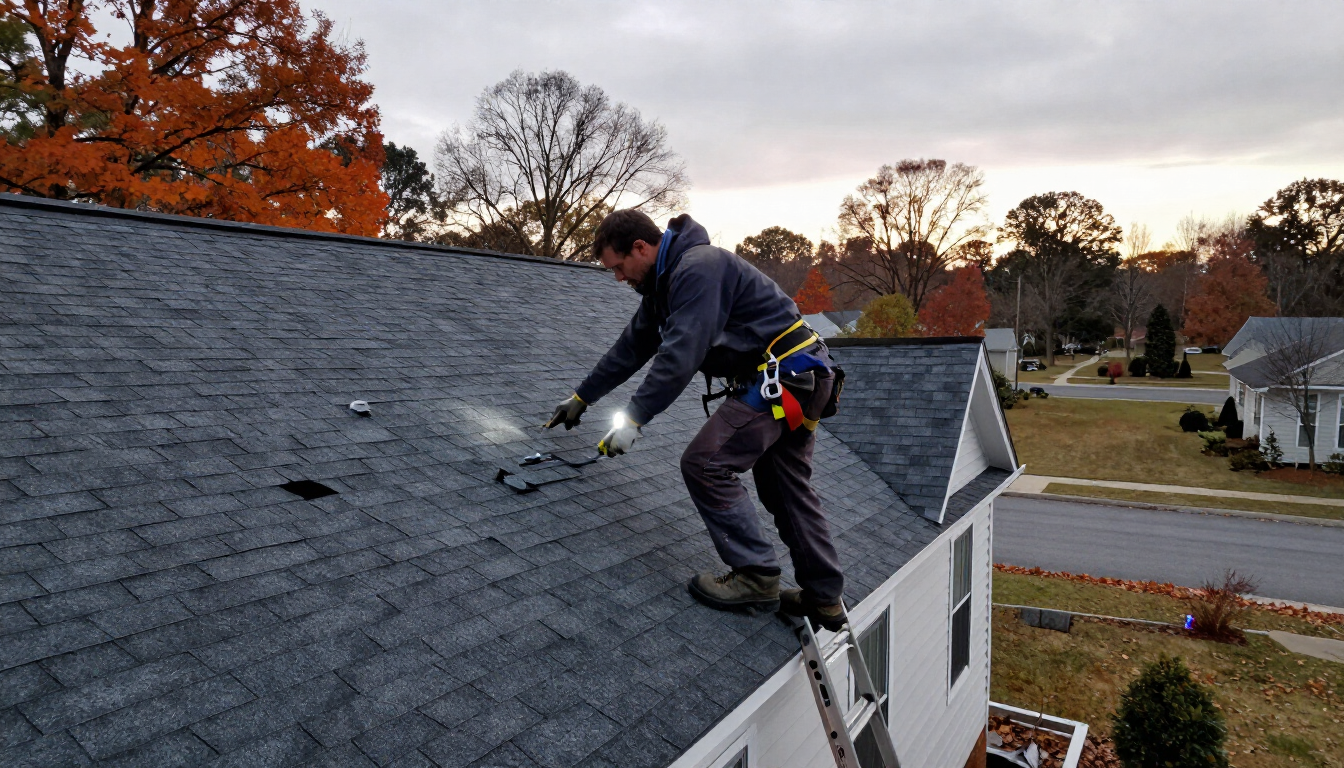
- Look up at the drip edge where roof meets gutter. Gaps let water run behind the system.
- Trim overhanging limbs where you safely can.
If ladder work isn't safe for you, skip straight to a professional inspection. No gutter is worth a fall.
What Happens During a Patriot Gutter Evaluation
Patriot Exterior Services is a locally based, fully insured exterior contractor providing
exterior services in Fort Oglethorpe, GA and throughout North Georgia and Southeast Tennessee. A gutter evaluation is a straightforward onsite visit — no pressure, no scare tactics.
We look at the full system: gutter condition and sizing, hanger spacing, slope, seam integrity, drip edge and roof-to-gutter transition, downspout placement, and where water is actually discharging relative to the foundation. We check the fascia and soffit for moisture damage, because that often determines whether repair is realistic.
You get a clear explanation of what we found, honest options ranked by what actually needs doing, and a detailed written quote within 48 hours of the visit. If we recommend seamless gutters, they're formed on site to fit your rooflines. When the work is done, old materials and debris leave with us — our clean-job-site policy isn't optional.
Financing options are available if a larger project makes more sense than a series of repairs.
Frequently Asked Questions About Gutters in Fort Oglethorpe, GA
How often should gutters be cleaned in this area?
Twice a year works for most homes — once in late spring and once after leaf drop in late fall. Homes under heavy tree cover often need a third visit mid-fall, because leaves come down over several weeks rather than all at once.
Do gutter guards really work with pine needles?
Fine micro-mesh systems handle needles far better than open screens or foam inserts. No system eliminates maintenance entirely, though. Expect to inspect and clear the surface of the guards at least once a year.
Why do my gutters still overflow right after a cleaning?
That usually means the cause isn't debris. The most common culprits are gutters undersized for the roof area, a slope that has shifted, a partially blocked downspout below the visible section, or a blocked corner miter.
How long does gutter replacement take?
Most residential seamless gutter projects are completed in a day, though timelines depend on the size of the home, the number of stories, weather, and site conditions. We'll give you a realistic window in your written quote.
Can clogged gutters really damage a foundation?
They contribute to it. Gutters don't crack a foundation overnight, but repeatedly saturating the soil against a wall over multiple seasons is a well-documented contributor to settling and crawl space moisture. Managing roof runoff is one of the cheapest forms of foundation protection available.
Is it worth repairing old sectional gutters?
Sometimes. If the fascia is solid and only one or two joints are leaking, a repair is reasonable. Once several seams have opened, replacing with seamless usually costs less over time than repeated repair visits.
Do you handle the roof side of the problem too?
Yes. Gutters and roofing are connected systems, and problems at the drip edge, flashing, or roof valley often show up as a gutter complaint. We evaluate both.
Get Your Gutters Ready Before the Leaves Fall
Fall is the shortest window you get. Handling gutter maintenance now means clear downspouts through leaf season, water moving away from your foundation through winter storms, and no emergency ladder work in freezing weather.
Need gutter repair, replacement, or leaf protection in Fort Oglethorpe, GA? Contact Patriot Exterior Services at
(423) 618-7810 to schedule an onsite gutter evaluation and receive a detailed written quote within 48 hours of the visit. You can also
request an estimate through our contact page.